One Room, Two Uses: Fixed Layout or Flexible Furniture?
Compare a fixed room layout with flexible furniture to choose an arrangement that feels ready for daily use and can still change when needs shift.
Does a room need to work well now, or stay useful when its job changes? A fixed room layout makes one purpose easy to use; flexible furniture lets the same room shift between tasks. The trouble starts when a household expects one approach to solve both problems without deciding which inconvenience it would rather live with.
Think of the spare room that is also a home office, or the dining area that sometimes hosts a project. A settled arrangement can feel calm and ready. A changeable one can make room for more than one routine, but only if shifting things around is genuinely manageable. Here are the problems that tend to decide the matter.
The room is supposed to serve two uses but one keeps taking over
What causes it: The uses do not have equal frequency or equal urgency. If someone needs a desk every weekday and guests visit occasionally, treating both functions as equally important can leave the desk inconveniently buried under the guest bed’s territory.
What to try first: Name the room’s primary use for an ordinary week, then identify the secondary use and how quickly the room must switch. If the secondary use can tolerate some setup, give the primary use a dependable home and let the other use borrow the remaining space.
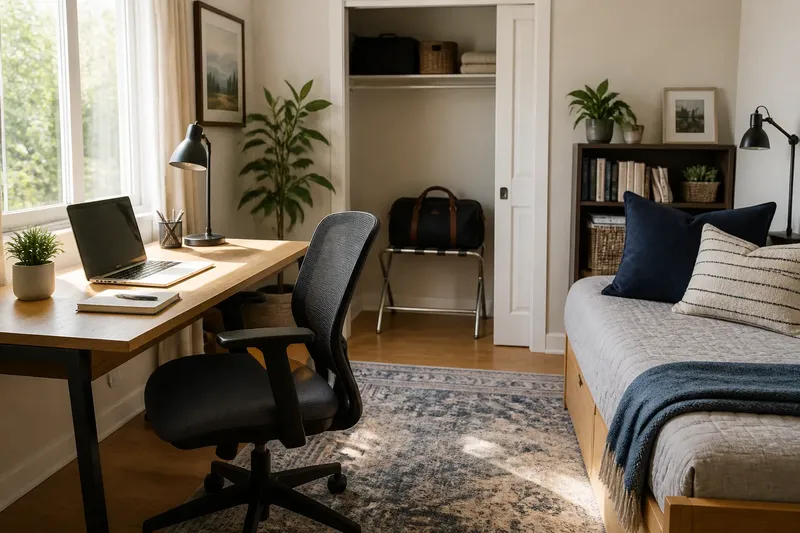
Say you work from home in a spare bedroom and occasionally need floor space for a visiting relative’s luggage. Imagine the desk is used every day, while the luggage appears only now and then. Keeping the desk in its working position and using a folding luggage rack that stores in the closet is likely to make daily work feel ready without requiring a room overhaul. If the guest instead needs the whole room for an extended stay, a more substantial conversion may deserve a planned routine.
Flexible furniture takes longer to move than anyone expected
What causes it: “Movable” describes an object, not the whole process. A table may roll easily but still require clearing, unplugging a lamp, shifting a rug, and finding somewhere for the chairs. A room that asks for a small production before each use will usually be used in its unconverted state.
What to try first: Walk through the change in the order it would happen. Notice which items need lifting, which cords cross the path, and where displaced objects can wait. Then remove one unnecessary transition: keep a clear route, store related pieces together, or choose furniture that moves without being emptied first.
For a room that alternates between a sewing table and open exercise space, a lightweight table on locking casters may be more useful than a heavy table that must be carried. But wheels are not a universal fix: they need a suitable floor, and the table should stay stable during use. Product instructions and floor conditions matter here, so check both before choosing casters.
The fixed arrangement feels convenient until the room changes
What causes it: A permanent layout can quietly depend on a particular routine: a desk against one wall, a reading chair in a bright corner, or a bed that leaves a narrow path to the closet. A new work schedule, mobility need, hobby, or household member can expose how much the arrangement assumed things would stay put.
What to try first: Before treating the current setup as permanent, sketch one plausible change on paper. Mark doors, windows, outlets, heating vents, and the paths people use. Then see whether the main furniture can move without blocking circulation or making an everyday task awkward. This is not a prediction exercise; it is a way to notice which choices are difficult to reverse.
A fixed layout can still be the better choice when it gives a frequent task a clear, comfortable place. The useful distinction is between fixed by preference and fixed by accident. A bookcase placed where it works well is a decision; a bookcase so large that no other arrangement is possible may be an expensive veto from the past.
Stored flexible furniture becomes clutter of its own
What causes it: A second function requires objects that must live somewhere between uses. Folding chairs, a portable monitor, craft supplies, or a table leaf can consume the very space that flexibility was meant to protect. If storage is remote or crowded, putting things away becomes an extra task each time.
What to try first: Decide where every component will go when it is not in use. Check that the storage spot is accessible without moving unrelated belongings, and that the item can be retrieved without another person’s help if that matters in your household. If the only available home is an awkward corner behind several boxes, the room may need fewer conversion pieces, not more.
Some furniture can serve both purposes without being put away: a bench can provide seating and hold supplies, or a narrow console can support a work surface while leaving the room’s center open. Dual-purpose pieces help only when both roles are comfortable enough to use. A decorative box that is too heavy to open is storage in the same sense that a locked cupboard is a pantry.
The room looks adaptable but feels unfinished
What causes it: Flexibility can become a reason to postpone decisions. Furniture stays loosely placed, lighting is inadequate for one task, or the room lacks a clear visual center because every arrangement is treated as temporary. Adaptability should make change possible, not make the present room feel like a waiting area.
What to try first: Give the room a default arrangement that works for its most common use. Set lighting, seating, and frequently used tools for that routine. Then make the alternate arrangement specific: decide what moves, where it goes, and what must be ready before the room changes. A defined default lowers daily friction while preserving the option to switch.
Use a quick floor sketch or painter’s tape to mark furniture footprints before buying a large piece. Tape can show whether a chair blocks a door swing or whether a table leaves room to pass. It cannot tell you how a chair feels after an hour, but it can catch an obvious spatial conflict before delivery day adds its own opinion.
How should you choose between a fixed and flexible room?
Which use should get the best position?
Give the most frequent or least negotiable use the strongest location, such as the best light or easiest route through the room. Let occasional activities adapt around it unless they have requirements the primary setup cannot meet.
When is flexible furniture worth the extra handling?
It is worth considering when the room must change often enough that the alternate use matters, and the transition can stay simple. If conversion involves several awkward moves, a smaller secondary setup or a dedicated corner may be more usable.
What should you measure before choosing furniture?
Check the room’s clear paths, door and drawer swings, and the space needed to use each piece, not only the piece’s footprint. Include storage for anything that must leave the room during a change.
Can one room have a fixed layout and still adapt?
Yes. Keep the core arrangement settled and make only one or two elements movable, such as a side table, task chair, or folding screen. Selective flexibility avoids turning the whole room into a furniture-moving exercise.
Choose the amount of change the room can actually support
A fixed room layout is often the sensible choice when one use dominates and a ready, dependable setup matters more than occasional transformation. Flexible furniture makes more sense when the room’s secondary role is real, recurring, and easy to prepare for. Between them is a useful middle ground: a stable layout with a few pieces chosen for movement.
Before buying, describe the change in plain actions: clear the table, move the chair, open the folding screen. If the sequence sounds manageable and each object has a place, the room may adapt without much fuss. If it depends on clearing half the closet or recruiting a second person, the better long-term decision may be to make the everyday arrangement fit more uses as it stands.