From Bakelite to Today: Why Materials Gather Patina
Why materials gather patina, how to tell character from damage, and how to care for aging surfaces without erasing useful signs of everyday use.
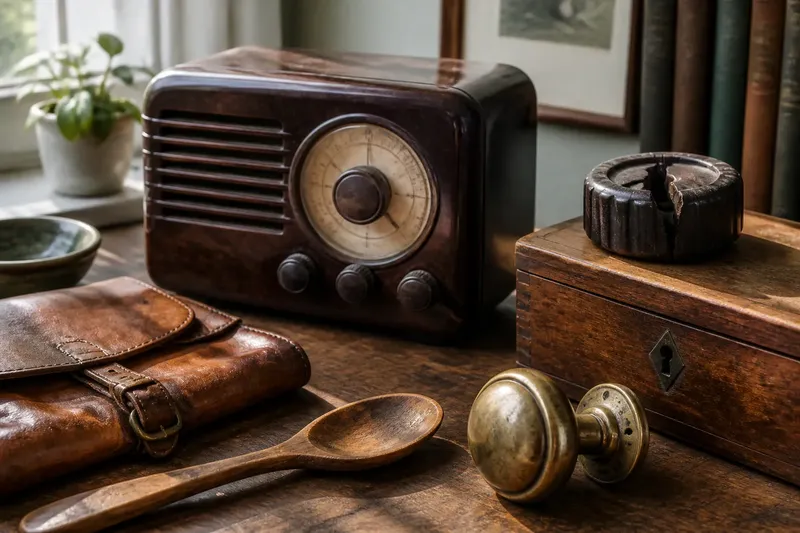
Why materials gather patina becomes clear when you compare a Bakelite radio dial, darkened where fingers turned it, with a cracked plastic knob that no longer holds its shape. Both have changed through use, but only one change may be worth preserving. The useful question is not whether a surface looks old. It is what changed, what that change tells you, and whether the object still does its job.
Patina is visible alteration that develops as a material meets light, air, touch, moisture, friction, or its surroundings. The word is often applied to a desirable surface, especially on metal, wood, leather, and stone. It is not a certificate of quality. Before cleaning, polishing, or accepting a change as character, follow the evidence in order: identify the material, inspect the change, check the object’s function, then choose care that fits the material and the life you want it to have.
Start by identifying the material and its finish
The same mark can mean different things on different surfaces. A warm brown shift on solid wood may be a change in the wood or its finish; a similar patch on a laminate table may be a worn printed layer. A dull area on brass might reflect handling, oxidation, old lacquer, or all three. Looking only at color can send you toward the wrong treatment.
Begin with what you can observe without taking the object apart. Look for a maker’s label, care card, product manual, or material description. Note whether the surface is bare, painted, coated, plated, laminated, or covered in fabric. Examine an inconspicuous edge for a visible seam, veneer layer, coating boundary, or difference in texture. Do not infer that a metal-colored surface is solid metal, or that an object sold as wood is solid timber.
Bakelite illustrates why identification matters. It is an early synthetic plastic, often associated with radios, handles, and small household objects. Its finish and condition can vary, and a surface that has dulled or changed color should not be treated like brass simply because it looks old-fashioned. For any material, care directions from the maker take priority; when the material or finish is uncertain, ask a conservator or a qualified repair professional before applying a solvent, abrasive, oil, or polish.
Read the change before deciding what it means
Once you have a reasonable material description, inspect where and how the change appears. Patina often follows contact and exposure: a handle may darken where hands rest, a wood tabletop may fade beside a window, or a leather bag may soften at a fold. A coherent pattern can tell you how an object has been used. That story may be pleasing, but the pattern alone does not establish that the surface is sound.
Look for change that suggests loss rather than a settled surface. Flaking, blistering, fresh powder, deep cracking, a sticky feel, spreading stains, loose layers, or a smell that was not there before can signal active deterioration. On metal, corrosion may be more than a color change; on leather, a dry surface that splits at a bend is not simply a handsome record of handling. Keep the inspection modest: note what is visible, avoid scraping or rubbing to “see what happens,” and compare the affected area with a protected part of the same object.
Ask whether the change is stable and whether it affects use. A faded patch on the back of a cabinet may matter less than a split near a chair joint. A smooth worn spot on a wooden spoon may be an ordinary result of repeated washing, while a rough or splintering area that catches food or skin calls for attention. The distinction is practical: visible age can be accepted; loss of material, hygiene, comfort, or function cannot be waved away as character.
Choose whether to preserve, clean, or repair
After inspection, choose the least intervention that meets the object’s purpose. If the change is stable, safe for its intended use, and acceptable to you, leaving it alone is a real care decision. It avoids turning a surface into a maintenance project merely because it no longer looks new.
If dirt is obscuring the surface, start with a dry, soft cloth or a gentle brush, provided the material allows it. If more cleaning seems necessary, check the maker’s instructions and test the proposed method in a hidden area; stop if color transfers, the finish softens, or the surface changes unexpectedly. Do not apply a generic polish, household cleaner, or oil across mixed materials. A product suited to bare wood can be wrong for lacquer, and a metal cleaner may harm a surrounding coating.
Repair is the better choice when a change interferes with use or is progressing. A loose surface layer, cracked handle, or unstable finish may need someone with the right materials and knowledge. For an object with family, design, or resale significance, consult a conservator before stripping, repainting, or buffing it. Such work can remove original material that cannot be put back. For ordinary objects, a repair professional can help distinguish a practical fix from a cosmetic makeover the object does not need.
Imagine a hypothetical situation: you inherit a Bakelite tabletop radio whose dial has become cloudy, while its buttons remain intact and its casing has no visible cracks. You first look for care information and avoid polishing the dial, then compare the cloudy area with a protected edge and check whether the controls still turn normally. If the change appears stable and the radio is meant to remain on a shelf, you might preserve the surface and dust it gently; if the dial’s condition obstructs use or continues to worsen, you would seek advice from a specialist rather than experiment with solvent.
Match ongoing care to the way the object is used
Care is not a promise to keep a surface unchanged. It is a way to limit avoidable damage while letting the object serve its purpose. Consider the material’s ordinary vulnerabilities and the object’s setting. Sunlight can alter finishes and colors; repeated moisture can affect wood, leather, and some metals; grit can scratch surfaces during routine wiping. Moving an object away from a harsh exposure or using a suitable mat may be more useful than applying another treatment.
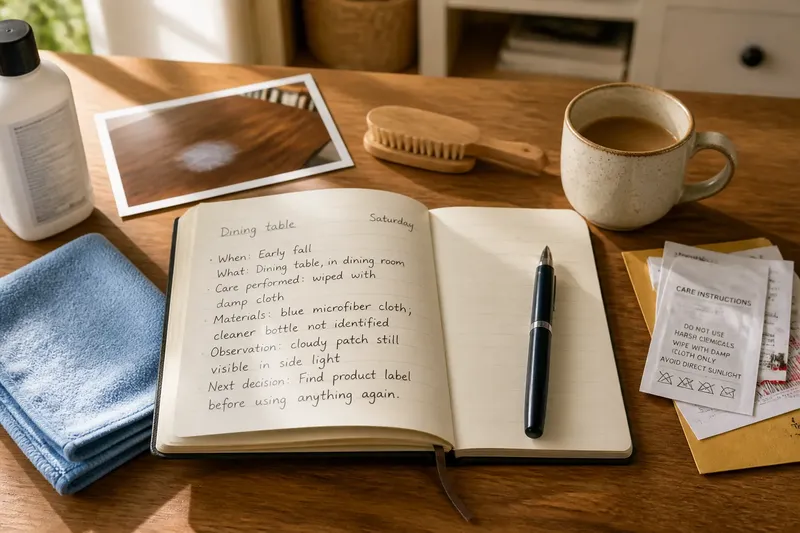
Keep care simple and specific. Use a clean cloth for dust rather than one carrying grit from another surface. Dry objects that should not stay wet. Store items in conditions appropriate to their material, and avoid wrapping a surface in a material that may trap moisture or transfer color. If you clean an object regularly, note the product and method so the next person does not unknowingly add an incompatible treatment. This is especially useful for furniture and household objects that combine wood, metal, glass, rubber, or plastic.
For objects used with food, children, or skin, function and cleanliness outrank an attractive aged appearance. A worn finish on a decorative box has different implications from a deteriorating surface on a cutting board or a handle used every day. Follow the maker’s care directions, and replace or professionally assess an object when its condition makes ordinary use questionable.
Why do materials gather patina?
Does every material develop patina?
Most materials change through contact with light, air, moisture, movement, or handling, but people do not call every change patina. The term usually describes a visible surface alteration that is accepted as part of an object’s appearance, rather than a failing that needs correction.
Is patina the same as damage?
No. A stable change in color or sheen can be harmless, while cracking, flaking, corrosion, or loss of function can point to deterioration. Judge the condition and use, not age alone.
Should I remove patina from metal?
Not automatically. Cleaning can change the finish, remove a coating, or erase evidence of handling, so identify the metal and finish before choosing a product. If the object has historical or personal significance, seek specialist advice before polishing it.
Can I make a new object look aged?
Artificial distressing can imitate wear, but it does not reproduce the material’s full history or tell you how the object will hold up. If you prefer an aged appearance, choose a finish designed for that look rather than using uncontrolled exposure or abrasive treatment.
Let the object’s purpose set the standard
Patina can make a material legible: a rubbed handle suggests touch, a softened leather edge suggests carrying, and a gradual shift in wood color records exposure. Those traces may deepen an object’s appeal, but age does not improve every material and use does not make every flaw meaningful. A surface earns preservation when it remains sound and its change suits the object’s purpose.
When you assess why materials gather patina, keep one distinction in view: a mark can be evidence without being a virtue. Preserve the changes you value, clean only what needs cleaning, and treat active deterioration as a condition to address rather than a story to admire. The result is not an untouched object. It is an object whose visible history and practical life can continue together.